Teaching
Astrophysicists in academia tend to receive very little formal education training unless they pursue it voluntarily. Developing these important skills is one of my most important career goals. Below, I discuss some of my experiences thus far.
Classes taught
At VCU, I have taught PHYS 103: Elementary Astronomy, a general education astrophysics course, PHYS 381: Life in the Universe, an upper level astrobiology course, and PHYZ 207: University Physics I Laboratory, focusing on mechanics, heat, and wave motion.
Previously, at Dartmouth, I taught several astrophysics courses. At the graduate level, I taught ASTR 117: Observational Galactic Astrophysics, which focuses on processes in the Milky Way Galaxy. I also developed and taught ASTR 122: Ethical Astronomy, a special topics course that I describe in more detail below. Focusing on undergraduate physics and astronomy majors/minors, I taught ASTR 25: Galaxies and Cosmology, which focuses on galaxies, galaxy evolution, and cosmology, as well as ASTR 61: Observational Techniques in Astronomy, which teachest students how to observe on real telescopes and process real astrophysical data. Finally, focusing on general education, I taught ASTR 2: Exploring the Universe, an introductory astronomy course for non-majors.
Ethical Astronomy
In Fall 2024, I taught ASTR 122: Special Topics: Ethical Astronomy, a graduate level course at Dartmouth College. Students in astronomy tend to receive little to no education in the history of astronomy, and the education we do receive tends to overlook major advances by people beyond Europe and the United States. We also receive little to no education on the ethics of astronomy, which can result in the perpetuation of harm by astronomers—intentional or otherwise—against marginalized communities. This course addresses these educational shortcomings.
The course contains three primary sections: (1) "the worldwide history of astronomy," focusing on astronomical advancements and traditional knowledge from cultures that tend to go ignored in our education system; (2) "astronomy, colonialism, and imperialism," discussing the many historical and current ties between astronomy and imperial and colonial violence; and (3) "pursuing astronomy in right relation with marginalized communities," investigating the ways astronomy has failed in our responsibilities to our communities and what it would look like to pursue astronomy in a way that upholds those responsibilities.
I received the opportunity to teach this course thanks to my Guarini Dean's Postdoctoral Fellowship, which allows postdocs to teach a course of their choosing for one term. I conceptualized this course and developed it from scratch, including the syllabus and readings list, lectures, discussions, assignments, and all course activities. If you are interested in the syllabus or readings list, please feel free to reach out, and I would be happy to share!
I would like to extend thanks to the team at Movement Consulting (particularly Dra. Nicole Cabrera-Salazar, Alma Ramos, and Xandria Quichocho) for introducing me to several of the materials I use in this course, my amazing PROF Fellow cohort (Dr. Gabrielle Cabrera, Dr. Endia Hayes, Dr. Kaylen James, and Dr. Josephine Ong) for their support and valuable discussions, and Dr. Ryan Hickox, Dr. Peter Ferguson, and Dr. Taylor Hutchison for early feedback.
 Guest Lecturer: Undergraduate and Graduate Teaching
In 2023, I served as a guest lecturer for ASTR 2/3: Exploring the Universe for the Physics & Astronomy Department at Dartmouth College, teaching undergraduate level astronomy for science majors. I gave three lectures over two terms in 2023.
In 2024, I served as a guest lecturer for ASTR 116: Galactic Systems, a graduate level course for astronomers at Dartmouth College. I gave one lecture on Active Galactic Nuclei.Observational Astronomy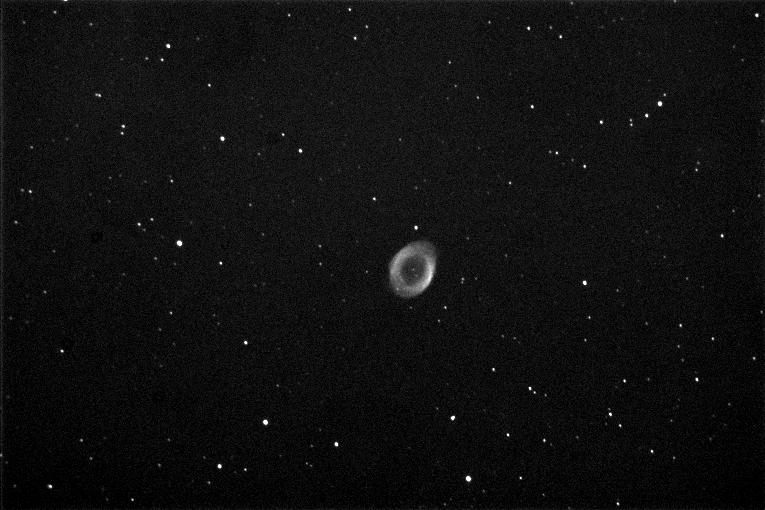
During my time as a graduate student, I served one year as the Instructor of Record for ASTR 102: Observational Astronomy at Texas A&M. I taught two sections of this course per semester, meeting each section once weekly for 3 hours in the late evening at the Texas A&M teaching observatory. The observatory features a classroom and outdoor observation deck where you can observe using several 8-inch telescopes, as well as multiple observing domes.
Each class consists of a lecture followed by an indoor or outdoor laboratory activity. As the Instructor of Record, I was trusted with teaching students to use the 8-inch telescopes and developing and delivering lectures, indoor lab activities and outdoor observational labs, quizzes, and exams, with no direct faculty supervision. This unique opportunity drastically expanded my skill set and cemented my passion for teaching.
Peer-Led Team Learning (PLTL)
As an undergraduate at UT Dallas, I worked for three years as a PLTL leader for General Chemistry I and II. As a PLTL leader, I met weekly with two groups of students to help them work through challenging question packets created by the chemistry faculty. The central tenet of PLTL is the socratic method, focusing on helping students via asking leading questions to guide them to the correct answers, thus helping them develop a deeper understanding of the material.
This experience highlighted for me the importance of establishing clear communication and trust with students, creating an environment where everyone felt comfortable speaking up and asking questions.
In my last year, I was promoted to PLTL Super Leader. Serving as Super Leader, I continued to meet with one group of students weekly while organizing the PLTL program, running PLTL Leader training sessions, and evaluating the performance of PLTL Leaders in the program.